
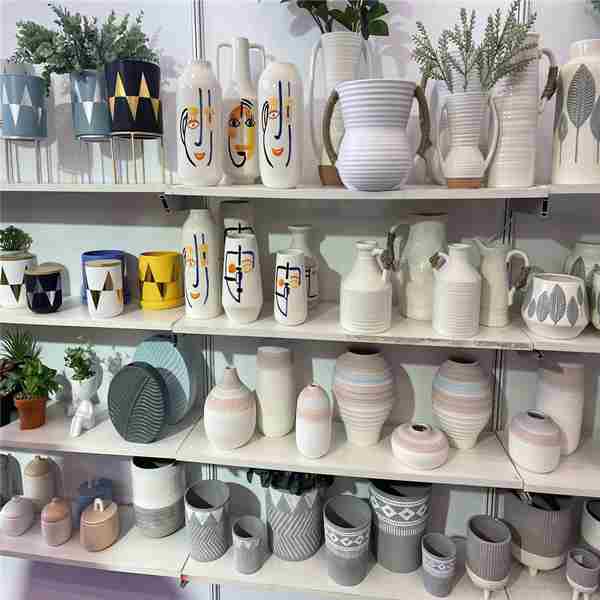
Kitchen and dining is one of the few home categories that has kept growing through every shift of the last few years. Home cooking became routine rather than novelty, foodservice recovered, and online retail widened the shelf for everyone. Grand View Research puts the global kitchenware market at USD 733 billion in 2025, and projects growth from USD 780 billion in 2026 to USD 1,233 billion by 2033.
Volume growth is the easy part of that story. The harder, more useful part is what buyers are actually specifying now — because the shelf has moved from "a pot is a pot" to a set of requirements about design, materials, durability and how fast a range can be refreshed. Below are the four trends shaping 2026 sourcing conversations, each with what it means for the buying decision.
| Metric | Value | Source |
|---|---|---|
| Global kitchenware market, 2025 | USD 733 billion | Grand View Research |
| Global kitchenware market, 2026 | USD 780 billion | Grand View Research |
| Projected market, 2033 | USD 1,233 billion | Grand View Research |
| Fastest-growing sales channel | Online retail | Global Market Insight |
Three demand drivers sit behind those numbers: health-conscious consumption (what the product is made of), normalised home cooking (how often the product is used), and e-commerce (how the product is bought, and how often a range has to change). Each one pushes sourcing in a slightly different direction.
The kitchen has been absorbed into the living space. Open-plan layouts, more home entertaining and an enormous amount of social-media styling have turned cookware, tableware and tools into objects that are seen, not just used. A pan that lives on the hob in an open kitchen is a design decision as much as a cooking decision.
The commercial result is a move from function-led to design-led ranges: better-looking products, colour families rather than single colours, stackable and combinable sets, and gift-ready presentation. Industry examples are easy to find — Le Creuset has built a following on annual colour collections, while Joseph Joseph develops co-ordinated, series-based kitchen ranges rather than one-off items.
Consumer attention has moved from "does it work" to "what is it made of". Tighter rules on food-contact materials, plus the general rise of health-conscious buying, have made material choice a competitive feature rather than a compliance footnote.
The clearest example is coatings. Regulation of PFAS across Europe and North America continues to tighten, and non-stick cookware has been moving toward PFAS-free coating systems. The same pressure shows up elsewhere: food-grade silicone and ceramic coatings in tools and bakeware, and wider use of bamboo, wood and glass in kitchen ranges. OXO has moved ceramic-coated and food-grade silicone products into its kitchen line, and IKEA has expanded bamboo, wood and glass kitchen items — both useful illustrations of where mainstream ranges are heading.
Across mature markets, the buying question has shifted from price-first to quality-first. Durability, day-to-day experience and long-term value now carry more weight, and that expectation has spread beyond cookware into tableware, kitchen tools and storage.
Cookware brands have been the most visible in this: Fissler, WMF and All-Clad have all continued to develop around multi-layer clad stainless steel, precision manufacturing and long service life. That is a signal about where the quality bar sits, and it has filtered down into mid-market specifications.
Online is the fastest-growing route to market for kitchen and dining products. Consumers keep shifting purchases online, and large retailers have responded by expanding their online kitchen ranges — Walmart, Target and Amazon being the obvious examples. That has changed the buying behaviour behind the listing.
| Trend | What buyers ask for | Supplier evidence that answers it |
|---|---|---|
| Kitchen aesthetics | Colour families, sets, gift packaging, merchandisable ranges | Colour-matching control, series development, retail-ready packaging |
| Material upgrade | Food-contact compliance, PFAS-free coatings, safe materials | Material declarations, test reports, PFAS-free coating options |
| Quality upgrade | Durability, consistency, defined process | Sample sign-off, first-article check, inspection reports |
| Channel upgrade | Fast new development, replenishment, wider assortments | Design cycle time, production flexibility, SKU consolidation |
One practical conclusion runs through all four trends: buyers are no longer purchasing individual products, they are purchasing a supply relationship that can keep a range current and compliant. That is why questions about material documentation, colour control, packing and replenishment now come up at the first meeting rather than in the contract stage.
The kitchenware market is growing to USD 1,233 billion by 2033 on Grand View Research's projection — but the growth is landing on suppliers who can deliver design, material safety, durability and responsiveness as one package. A range that looks good, uses a compliant material, survives daily use and can be replenished quickly is what wins the shelf in 2026.
Ningbo Shihm Import and Export Co., Ltd. has supplied home décor, seasonal products and houseware to supermarkets, chain stores, importers and e-commerce sellers since 2008. If you are building a kitchen and dining programme for the coming season, start from our kitchen and dining range, look at how these lines combine with storage and organisation and home décor in a mixed container, or read the companion piece on regional buyer requirements in Europe, North America and emerging markets. To scope a range, tell us what you are looking for and we will come back with options, sampling timelines and a cost estimate.